
Navigating a large building, campus, healthcare facility, retail center, or public space should feel simple and intuitive. When visitors can easily understand where they are and where they need to go, their overall experience becomes more comfortable and enjoyable. This is where professional wayfinding design plays an important role. An SPM Design LA wayfinding designer can help create visual systems that guide people through complex environments while supporting the identity and character of a space.
What Is Wayfinding Design?
Wayfinding design is the process of creating visual and physical cues that help people navigate a particular environment. These cues can include directional signs, maps, building identification, room numbers, directories, symbols, color systems, and other environmental graphics.
Effective wayfinding is more than simply placing signs throughout a property. A successful system considers how people naturally move through a space and determines where information is most useful. The goal is to provide the right information at the right location without creating visual confusion.
See also: Smart Sensors in Manufacturing
The Importance of Professional Wayfinding
Large environments can be challenging to navigate, especially when visitors are unfamiliar with the layout. Hospitals, universities, airports, hotels, office complexes, and mixed-use developments may contain multiple entrances, floors, corridors, and destinations.
A thoughtfully designed wayfinding system can reduce confusion by creating a clear visual language throughout the environment. Consistent typography, colors, symbols, and directional information allow visitors to understand their surroundings more quickly.
For businesses and organizations, this can also contribute to a more professional and welcoming environment. Visitors are more likely to have a positive impression when they can find their destination without repeatedly asking for assistance.
How an SPM Design LA Wayfinding Designer Can Help
An SPM Design LA wayfinding designer can approach navigation as part of the overall design of an environment. Instead of treating signs as separate elements, the designer can integrate them with architecture, interiors, branding, and environmental graphics.
The process may begin with an analysis of the property and the way visitors move through it. Designers can identify major decision points, entrances, destinations, and areas where visitors are most likely to become confused.
From there, the wayfinding system can be developed around a clear hierarchy of information. Important destinations can receive greater visual emphasis, while secondary information can be presented in a way that does not overwhelm visitors.
Key Elements of Wayfinding Design
A successful wayfinding system can incorporate several different elements.
Directional Signage
Directional signs help visitors understand which route to take. They are particularly important at intersections, entrances, elevators, stairways, and other decision points.
Identification Signs
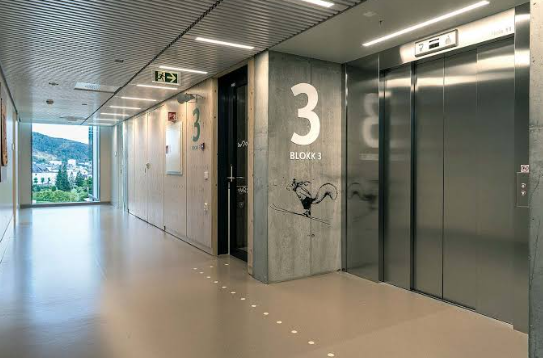
Identification signs tell visitors where they are. These can be used for buildings, departments, rooms, entrances, parking areas, and other destinations.
Maps and Directories
Maps provide an overview of a larger environment. A well-designed map can help visitors understand the relationship between different destinations and determine the best route.
Symbols and Icons
Universal symbols can communicate information quickly, even when visitors speak different languages. Consistent iconography can make a wayfinding system easier to recognize and understand.
Environmental Graphics
Wayfinding can also include large-scale graphics, colors, patterns, and architectural features. These elements can make navigation more engaging while reinforcing a property’s visual identity.
Combining Function With Visual Identity
One of the most valuable aspects of professional wayfinding is the ability to combine practical navigation with creative design. Signs need to be easy to read and understand, but they should also fit naturally into their surroundings.
A designer may consider typography, color contrast, materials, lighting, scale, mounting locations, and architectural finishes. These decisions help ensure that signs are visible without appearing disconnected from the environment.
For branded spaces, wayfinding can also incorporate elements of the organization’s identity. This creates a consistent experience from the moment visitors enter the property until they reach their destination.
Designing for Different Users
Effective wayfinding should consider the needs of different types of visitors. People may have different levels of familiarity with a building, varying visual abilities, or different language backgrounds.
Accessibility is therefore an important consideration. Clear typography, appropriate contrast, recognizable symbols, and strategically positioned information can make navigation easier for a broader range of users.
Designers may also consider pedestrian flow, vehicle access, emergency routes, and other practical requirements depending on the project.
Creating Better Experiences Through Wayfinding
A thoughtfully planned wayfinding system can make a significant difference in how people experience a space. It can reduce uncertainty, improve movement, reinforce a brand, and make complex environments feel easier to understand.
For organizations developing or renovating a major property, working with an experienced SPM Design LA wayfinding designer can provide valuable expertise throughout the planning and design process. From initial site analysis to signage concepts and environmental graphics, professional wayfinding design can turn navigation into an intuitive part of the visitor experience.
Ultimately, the best wayfinding systems are those that people barely notice because they simply work. By combining clear communication, thoughtful placement, accessibility, and strong visual design, wayfinding can help create spaces that are easier to navigate and more enjoyable to experience.