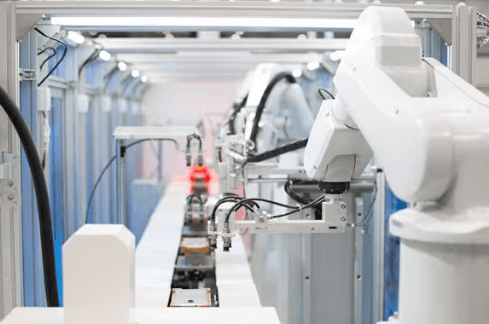

Smart sensors underpin modern manufacturing by delivering real-time data for condition monitoring, autonomous decisions, and digital twins. Selecting appropriate modalities, calibration discipline, and ruggedness versus accuracy drive uptime. Edge processing and energy harvesting extend coverage, while secure, standardized protocols enable scalable IIoT integration. Data governance and traceable lineage translate signals into maintenance plans and quality control. The path from sensing to actionable insight invites ongoing optimization and cross‑functional alignment to sustain performance gains.
How Smart Sensors Power Modern Manufacturing
Smart sensors are the backbone of modern manufacturing, enabling real-time data collection, condition monitoring, and autonomous decision-making across production lines.
They enable Digital twins to simulate performance, optimize processes, and predict failures, reducing downtime.
Energy harvesting sustains low-power nodes, extending coverage and resilience.
Data-driven insights drive continuous improvement, freedom to reconfigure lines, and scalable optimization without compromising safety or efficiency.
Selecting Sensor Technologies for Your Plant
As manufacturing environments move from broad capability to targeted performance, choosing sensor technologies requires aligning sensing modalities, energy budgets, and data needs with process goals.
The selection hinges on reliability, calibration ease, and lifecycle cost, balancing ruggedness and accuracy. Emphasize sensor calibration discipline and formal data governance to sustain traceability, reproducibility, and compliant optimization across diverse production lines.
Connecting and Analyzing: Data, IIoT, and Edge Processing
Connecting and analyzing data from sensors, IIoT platforms, and edge devices enables precise visibility into production performance and immediate optimization opportunities.
Data pipelines precede governance, ensuring accuracy, lineage, and compliance.
Edge orchestration coordinates local compute and streaming, reducing latency and preserving bandwidth for critical decisions.
Practical integration prioritizes secure access, standardized protocols, and scalable analytics to sustain freedom through measurable improvements.
From Insight to Action: Predictive Maintenance and Quality Control
Anticipation rather than reaction defines modern maintenance and quality control, as predictive analytics translate sensor signals into actionable work plans that minimize downtime and defect rates.
Data-driven methods quantify failure probabilities, optimize inspection intervals, and orchestrate maintenance windows.
Predictive maintenance reduces spare costs, while continuous quality control refines process parameters, enabling autonomous adjustments and liberated teams pursuing consistent performance and operational freedom.
See also: keybreach
Frequently Asked Questions
How Do Smart Sensors Protect Data Privacy on the Factory Floor?
Data privacy on the factory floor is protected through encryption, access controls, and anonymization, enabling secure data collection while minimizing exposure. The approach prioritizes verifiable policies, continuous auditing, and optimization of signal integrity and operational freedom.
What Are the Cost Considerations Beyond Purchase Price?
A striking 72-hour downtime average highlights cost considerations beyond purchase price. The answer weighs reliability versus cost, emphasizing maintenance scheduling, energy use, software updates, and data integration impacts to optimize total ownership and free operational optimization.
How Do You Handle Sensor Calibration Across Multiple Lines?
Calibration is managed through centralized procedures, monitoring calibration drift across lines, and implementing multiline synchronization. The approach emphasizes data-driven, optimization-focused adjustments, standardized intervals, automated re-calibration triggers, and transparent metrics that support freedom to scale and improvise.
Can Sensors Operate in Extreme Environmental Conditions Long-Term?
Extreme environment operation is feasible; however, long term reliability depends on rugged hardware, thermal management, and proactive maintenance. Data-driven testing shows stability gains, optimization focuses on redundancy, calibration drift limits, and modular design for freedom-seeking industrial autonomy.
How Is ROI Measured for Sensor Deployments Across Sites?
ROI measurement methods are applied via net present value, payback period, and total cost of ownership, with cross site benchmarking guiding standardized benchmarks, data normalization, and sensitivity analyses to optimize deployments across diverse locations.
Conclusion
Smart sensors tie data streams to decisive actions, and the coincidence is striking: a single vibration spike pairs with a slowdown in production, a calibrator’s drift aligns with a quality drift, and energy harvesting quietly sustains a node just as maintenance windows shrink. In practice, selecting robust modalities, enforcing calibration discipline, and deploying edge analytics create actionable insights that preempt downtime. When data, governance, and response align, manufacturing performance improves with measurable, repeatable precision.